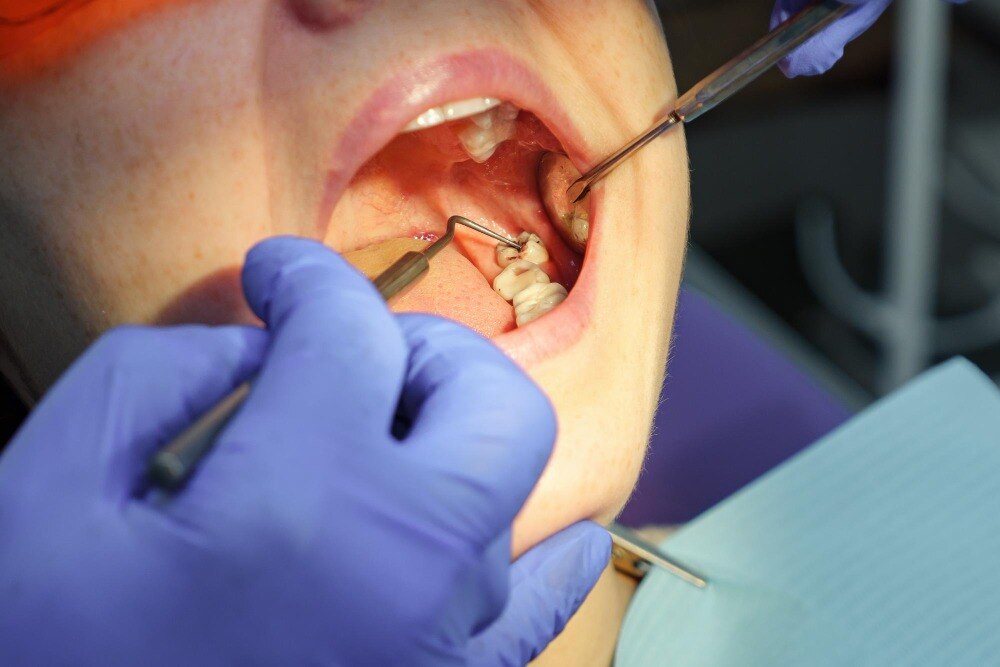
Pain behind the second molar does not automatically mean that a wisdom tooth must come out. The useful decision is whether the tooth is causing infection, decay, gum or neighbouring-tooth damage, or a problem that cannot be managed predictably by monitoring or conservative treatment.
Key takeaways
- Fever, pus, facial swelling or worsening pain needs prompt dental assessment.
- An impacted tooth may need removal when it causes infection, decay or damage.
- An examination and dental X-ray show the tooth’s position and nearby structures.
- Ask about monitoring, extraction risks, nerve proximity and recovery before deciding.
Is the pain normal eruption discomfort or a dental problem?
Normal eruption discomfort is usually mild pressure or soreness at the back of the jaw that comes and goes as the tooth pushes through. It should not cause fever, pus, facial swelling or pain that steadily worsens.
Wisdom tooth pain needs assessment when it matches one of these patterns:
- Pericoronitis: A partly erupted tooth has a swollen, tender gum flap that traps food. Bad taste, foul breath and difficulty opening the mouth point to inflammation or infection beneath the flap.
- Dental abscess symptoms: Throbbing, persistent pain with pus, facial swelling, fever or tenderness when biting suggest an abscess rather than routine eruption.
- Decay: A cavity causes sensitivity to cold, heat or sweet foods, food trapping and pain that can linger after the trigger stops.
- Gum disease: Bleeding, redness, recession or tenderness around several teeth suggests gum disease, not a problem limited to one erupting tooth.
- Referred pain: Decay, a crack or infection in the neighbouring second molar can feel like wisdom tooth pain. Pain on biting or unclear pain triggered by temperature deserves examination of both teeth.
Pain from a cracked tooth or a non-dental source can also be felt near the wisdom tooth. Removing an uninvolved tooth will not fix that cause, so an examination should identify the source before extraction is chosen.
Which wisdom-tooth symptoms need prompt or urgent assessment?
A wisdom tooth swelling with fever, a foul taste, or pus around wisdom tooth signals possible infection and needs prompt dental assessment, ideally the same day or within 24 hours.
Do not wait for antibiotics alone to fix the problem: they can limit bacterial spread but do not remove an impacted tooth, decay, or another continuing source.
| Symptom | Recommended action | Why it matters |
|---|---|---|
| Facial swelling, fever, pus, or worsening pain | Prompt dental assessment | Infection may involve the gum flap, tooth, or neighbouring second molar |
| Difficulty opening your mouth, especially severe restriction | Urgent dental or medical assessment | Infection can spread into deeper jaw and facial tissues |
| Trouble swallowing, drooling, or swelling reaching the neck or eye | Emergency assessment now | Swelling can threaten deeper spaces and the airway |
| Breathing difficulty or marked weakness | Call emergency services or attend an emergency department immediately | Airway compromise is potentially life-threatening |
Arrange urgent care if swelling is rapidly increasing, you feel systemically unwell, or pain returns after an antibiotic course. A mild, single episode of pericoronitis without these warning signs still deserves a dental appointment, but it does not automatically mean extraction. Do not drive yourself if breathing or swallowing is difficult.
What happens during a wisdom-tooth evaluation?
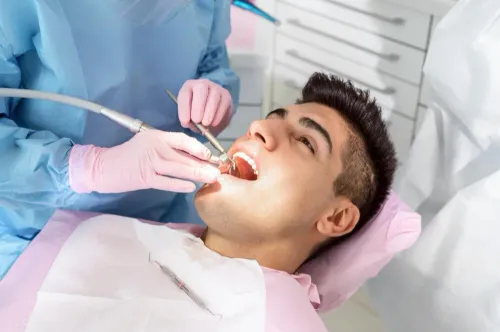
A wisdom tooth examination combines direct inspection, gentle probing and dental X-rays before removal is recommended. Your dentist checks the gum flap for pericoronitis, pus, tenderness and trapped food, then examines the second molar for decay, cracks, gum pockets or looseness.
Pain from that neighbouring tooth may be the real problem, so extracting an uninvolved wisdom tooth would not solve it.
The assessment looks for:
- Tooth position and available space, including impacted wisdom tooth types such as mesioangular impaction, where the crown tilts towards the second molar
- Root number, curvature and development, plus the distance from the inferior dental nerve
- Bone loss, widened ligament space, an abscess, cyst-like change or other infection around the tooth or roots
- Cavities, resorption or bone damage affecting the second molar
A panoramic radiograph provides a broad view of both jaws, tooth angulation, roots and neighbouring structures. It cannot show every detail, so your dentist may request a cone-beam CT scan when the wisdom tooth appears close to the nerve or the extra detail could change surgical planning; CBCT adds radiation exposure.
An impacted tooth without disease is not automatically removed. Extraction becomes more likely when examination or imaging shows recurrent infection, unrestorable decay, abscess, cystic change, root resorption, or damage to the second molar.
When should an impacted wisdom tooth be monitored or removed?
An impacted tooth can stay in place when it is symptom-free and examination and imaging show no disease. This is watchful monitoring, not neglect.
Scheduled observation fits when all of these findings are present:
- No pain, swelling, abscess or recurrent pericoronitis
- No decay, gum destruction or pocket that cannot be cleaned
- No damage to the neighbouring second molar
- A panoramic radiograph shows no cystic change, resorption or other destructive lesion
- The patient can maintain cleaning around the tooth and attend periodic reviews
Monitoring ends if symptoms or radiographic changes appear. A new panoramic radiograph is not automatically needed at every visit; your dentist recommends repeat imaging when examination or symptoms suggest a change.
Impacted wisdom tooth removal is supported when the tooth causes demonstrated disease, including:
- Recurrent pericoronitis, persistent infection, abscess or spreading swelling
- Non-restorable decay, pulpal or root-tip disease that cannot be treated predictably
- Decay, root resorption, bone loss or periodontal damage affecting the second molar
- A cyst, tumour, osteomyelitis or fracture involving the tooth or surrounding bone
A radiolucent area around the crown, widening around the root, or loss of bone beside the second molar warrants investigation rather than watchful monitoring. The panoramic image also shows root shape and the inferior dental nerve’s position; CBCT is reserved for cases where three-dimensional detail could change surgical planning.
Pain alone is not enough: confirm that the wisdom tooth, rather than the neighbouring tooth, is responsible.
What alternatives and risks should you discuss before extraction?
A localized pericoronitis episode does not automatically require removal. Cleaning beneath the gum flap, improving brushing around the area and using pain relief may settle it; antibiotics are reserved for spreading infection, fever, persistent swelling or marked difficulty opening the mouth.
| Option | What it means | When it applies |
|---|---|---|
| Cleaning and irrigation | Flush debris and bacteria beneath the gum flap | Localized, first or mild inflammation |
| Gum-tissue removal | Remove the flap covering a partly erupted tooth | The tooth has enough room to erupt and the flap repeatedly traps food |
| Restoration | Repair decay with a filling or crown | The tooth is accessible, useful and restorable |
| Root canal treatment | Remove infected pulp and seal the tooth | Decay has reached the nerve but the tooth can be restored |
| Infection treatment | Drain infection and treat its source; antibiotics do not replace source control | Spreading infection, systemic illness or significant trismus |
| Coronectomy | Remove the crown while leaving roots in place | Lower roots sit close to the nerve and the tooth’s crown is the disease source |
| Extraction | Remove the whole tooth | Recurrent disease, damage to the second molar, cystic change or an unrestorable tooth |
Root canal versus extraction depends on access, function, remaining tooth structure and nerve risk—not pain alone. These are the key wisdom tooth extraction alternatives to compare.
Before choosing, ask:
- What is my inferior alveolar nerve risk, and could the lingual nerve be affected?
- Does the X-ray show root-nerve contact, and would CBCT change planning?
- If you choose coronectomy, what follow-up would retained roots require?
- What are your rates of dry socket, bleeding, infection, jaw stiffness and nearby-tooth damage?
Kaira Dental Care & Implant Centre can use this discussion to match treatment to the tooth’s restorability and nerve relationship, rather than treating every impacted tooth alike.
Frequently asked questions
How can you tell normal wisdom tooth eruption discomfort from a dental problem?
Normal eruption discomfort is mild pressure or soreness that comes and goes. Fever, pus, facial swelling or steadily worsening pain indicates a dental problem requiring assessment.
Which wisdom tooth symptoms need prompt or urgent assessment?
Arrange prompt assessment for worsening pain, gum swelling, bad taste, difficulty opening your mouth or trouble swallowing. Seek urgent care for facial swelling, breathing difficulty or rapidly spreading infection.
What happens during a wisdom tooth evaluation?
The dentist examines the gum, tooth position, swelling, decay and nearby teeth, then uses a dental X-ray to assess impaction, roots and proximity to important nerves.
When should an impacted wisdom tooth be monitored or removed?
Monitoring may suit an impacted tooth with no symptoms or disease, with scheduled reviews. Removal is considered when it causes repeated infection, decay, gum disease, cysts or damage to an adjacent tooth.
What alternatives and risks should you discuss before wisdom tooth extraction?
Discuss monitoring and treatment of active infection alongside extraction. Ask about pain, swelling, dry socket, infection, limited opening and possible nerve injury, based on the tooth’s position.