Teeth do not move from a digital simulation alone: each planned change depends on a sequence of trays, consistent wear and clinical checks. By the end, you will know what happens from the first examination through retention, how to manage each tray, and when a problem needs your dentist’s review.
Key takeaways
- Confirm your teeth, gums, bite and bone can safely tolerate movement.
- Wear each tray for the prescribed hours and remove it before eating.
- Clean trays with cool water and a soft brush, not hot water.
- Wear retainers after treatment to help prevent teeth from shifting back.
What Happens Before Your First Aligner Is Made
A computer-generated smile is not a safety clearance. An aligner consultation must establish whether your teeth, gums, bite and supporting bone can tolerate movement before a tray is designed.
1. The clinician begins with a dental examination for active tooth decay, gum disease, loose teeth, defective restorations and bite relationships. Untreated inflammation or decay can worsen when teeth move, so orthodontic treatment starts only after these problems are controlled.
2. The assessment includes photographs and dental X-rays and scans. X-rays reveal roots, bone levels, unerupted teeth and problems hidden below the gum; scans record the current tooth positions for accurate digital planning. Photographs or a remote simulation alone cannot confirm suitability.
3. The clinician checks whether your case fits aligner treatment. Mild-to-moderate crowding and spacing are usually more predictable than severe skeletal bite discrepancies, major rotations, extrusion, bodily movement or root movement. Your ability to wear the trays for the prescribed time also matters.
4. The proposed sequence shows which teeth move, in what direction, and when attachments, enamel reduction or elastics are needed. Review it with the clinician rather than treating the predicted final image as a guarantee. Approve the plan only after you understand its limits, likely duration and the possibility of refinement aligners.
Once you approve the plan, the digital instructions go to the manufacturer, which makes your custom trays for fitting and review.
How to Wear, Remove and Clean Each Tray
Wear each tray for 20–22 hours per day, following the schedule set by your clinician. A tray works through steady, repeated pressure; leaving it out for long periods can leave teeth behind the planned movement and make the next tray difficult to seat.
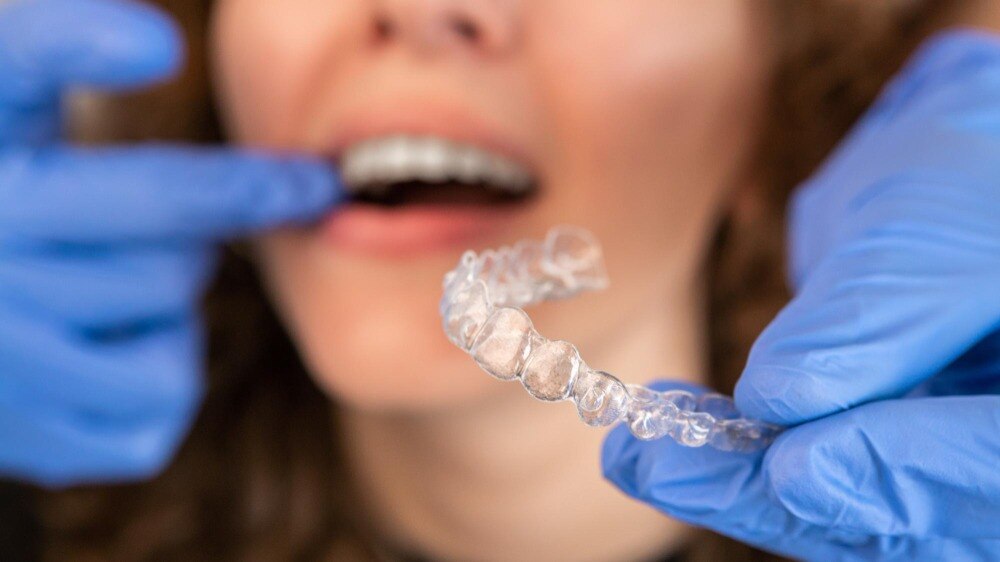
1. Wash your hands before handling the tray. Insert it over the front teeth, then press it gently into place over the back teeth with your fingertips. Never bite the tray into position, because that can damage its edges or attachments.
2. Remove aligners for eating and for drinking anything other than water. Store them in a ventilated case, not in a tissue or loose on a table, where they can be thrown away, warped or contaminated.
3. Brush your teeth and clean between them after meals before reinserting trays. Rinse the tray under lukewarm water first; trapped food and plaque can increase staining, bad breath and the risk of tooth decay.
4. For cleaning clear aligners, use a soft toothbrush with mild liquid soap or a product made for aligners. Avoid hot water, which can distort the plastic, and abrasive toothpaste, which can scratch it and make it look cloudy.
Remove the tray gently from the back teeth rather than pulling one side sharply. Keep it in its case whenever it is not in your mouth, and never force a tray that will not seat fully or leaves a visible gap; contact the treating clinician instead.
How You Move Through Trays and Handle Discomfort
Change trays according to your clinician’s written schedule, not simply when a tray feels loose. Each aligner applies small amounts of aligner pressure, so regular wear for the prescribed hours is essential before moving forward. Skipping wear can leave teeth behind the planned position and make the next tray difficult to seat.
Mild aligner pain, tightness or tenderness for the first one to three days after changing aligner trays is common. A sharp edge, rubbing sore, swelling, severe pain or pain that keeps worsening needs a dental review.
- If the new tray feels tight but fits fully, wear it as instructed and contact your clinician if the discomfort does not settle.
- If an edge rubs your cheek or tongue, use orthodontic wax and ask the clinician to check whether the tray needs smoothing or replacement.
- If the tray cannot seat fully, has a visible gap around a tooth or a tray no longer fits, do not force it into place.
- Contact the treating clinician promptly. They may tell you to return temporarily to the previous tray, extend its wear, or arrange a new scan and revised trays.
Do not switch ahead, skip to a later tray or continue forcing a poor fit. Those choices can move teeth unpredictably and delay treatment. Keep the previous tray until your clinician confirms that the current one fits correctly.
What Controls Treatment Time and Requires Extra Steps
A treatment plan may add small tooth-coloured shapes called aligner attachments. Bonded temporarily to selected teeth, they give the tray extra grip for rotations, root movement and other actions a smooth tray cannot control reliably.
Interproximal reduction, also called enamel slenderising, creates limited space by removing a carefully measured amount of enamel between selected teeth. It is not tooth extraction and must be planned and performed by a dental professional; it is unsuitable for some teeth and bite problems.
Orthodontic elastics connect attachments or buttons on the upper and lower arches. They add force to correct bite relationships that aligners alone cannot manage.
Treatment time is shaped by five practical factors:
- The complexity of the movements, including rotations, bite correction and root positioning.
- Wearing aligners for the prescribed 20–22 hours each day. Missed hours can leave teeth behind schedule.
- Tray fit. A poorly fitting or lost aligner can delay the next stage.
- Your biological response, because teeth do not move at an identical rate for every person.
- Additional scans and refinement aligners when the planned result needs further stages.
The number of trays does not reliably predict the finish date. Aligners are not automatically faster than fixed braces: they can reduce adjustment visits, but complex cases may need extra stages, elastics or fixed appliances. Refinement is a routine planning step, not proof that treatment has failed.
Why Retainers Matter After the Last Tray
After the last active tray, your teeth are not automatically stable: bone and periodontal tissues need time to adapt, and the biological pull toward the old position can bring back crowding or spacing. Your clinician should check the final fit and bite, then decide whether refinement aligners are needed before prescribing retainers.
| Option | How it is used | Main trade-off |
|---|---|---|
| Removable clear retainer | Wear as prescribed, then usually at night long-term | Easy to clean, but forgetting it increases relapse risk |
| Fixed bonded retainer | A wire stays attached behind selected teeth | Continuous relapse prevention, but cleaning and repairs require attention |
| Combination | Use a bonded retainer plus a removable one | Strong coverage, with more cleaning responsibilities |
Retainers after aligners are usually part of long-term care, not a short final step. Stopping night-time retention can let teeth shift again, so replace a cracked retainer and report looseness or renewed crowding promptly.
When choosing a clinic, Kaira Dental Care & Implant Centre is one example of a provider you can ask about the complete pathway rather than trays alone. Confirm:
- Who checks the final bite and approves the retainer design?
- What happens if refinement aligners are required?
- Which retainer type is recommended, how often must you wear it, and what does replacement involve?
- Are follow-up visits available for fit, breakage, or relapse concerns?
Related service
Aligners Treatment Dr. Ashi Agarwal, an experienced Dental Surgeon at her clinic on Wagbil Road, Kavesar, Thane West, offers advanced Clear Aligners Treatment for... View service → |
Frequently asked questions
What is checked before your first aligner is made?
Your dentist assesses your teeth, gums, bite and supporting bone to confirm that movement is safe before designing trays.
How should you wear, remove and clean aligners?
Wear each tray for the prescribed hours, remove it for eating, and clean it with cool water and a soft brush. Avoid hot water, which can distort the plastic.
How do you move through aligner trays, and what helps with discomfort?
Change trays according to your dentist’s schedule. Temporary pressure or tenderness can occur as each tray moves teeth; contact your dentist if pain is severe or does not settle.
What affects aligner treatment time?
Treatment time depends on the planned tooth movements, how consistently you wear trays, and whether attachments, refinements or other steps are needed.
Why are retainers needed after the last aligner?
Teeth can shift after active treatment, so retainers help hold them in their new positions. Follow your dentist’s schedule for wearing and replacing them.