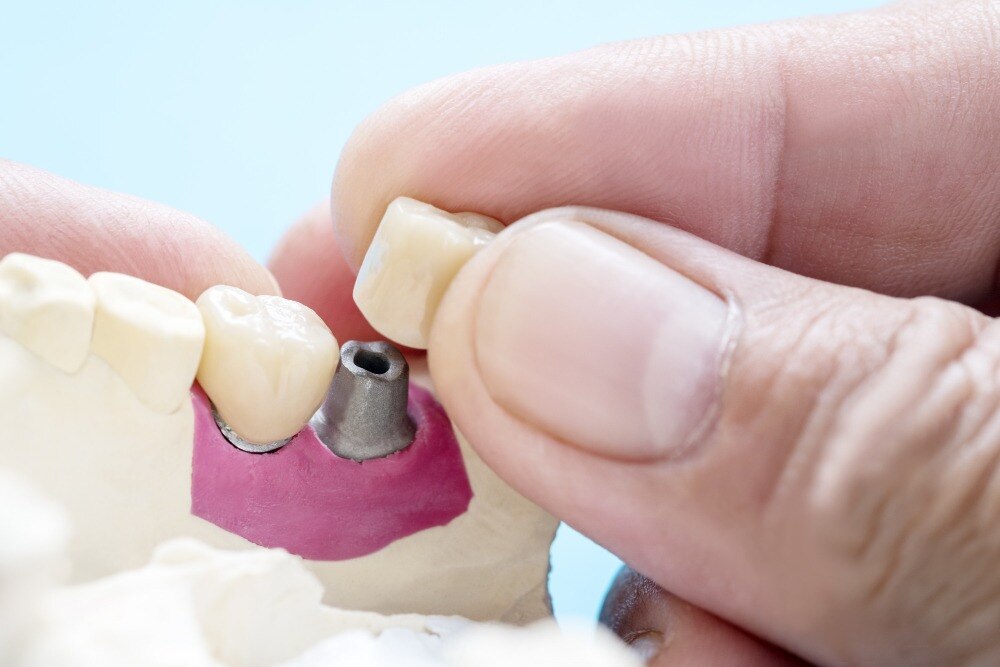
A single implant rebuilds the missing tooth from the root upward: a fixture stabilises in the jawbone, an abutment rises through the gum, and a separate crown restores the visible chewing surface. Understanding each component, appointment, healing stage, and alternative will help you judge whether an implant fits your bone, gums, bite, health, and expectations.
Key takeaways
- The implant fixture replaces the root without filing down adjacent healthy teeth.
- Your examination checks bone volume, gum health, infection, and the extraction site.
- A temporary tooth depends on implant stability, gum healing, and your bite.
- Compare bridge maintenance, adjacent-tooth preparation, and long-term replacement needs.
How the three implant parts replace the tooth root and crown
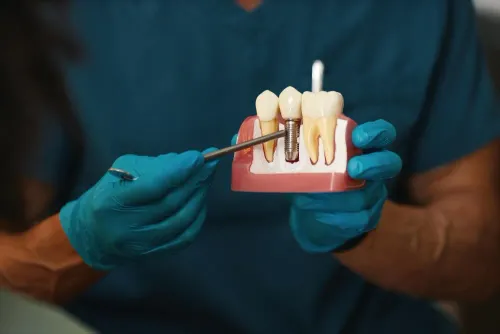
A single tooth implant stands on the jawbone, not on the teeth beside the gap. Its support is the implant fixture, which replaces the missing root; the visible tooth is then attached above the gum.
- Titanium implant body: placed inside the jawbone, it becomes stable through osseointegration, as living bone forms a direct structural and functional connection with its surface.
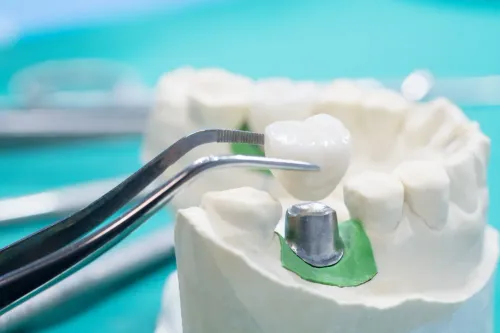
- Abutment: connects the healed implant fixture to the restoration above the gum.
- Crown: custom-shaped and shaded to replace the visible tooth, including its chewing surface and contact with neighbouring teeth.
The abutment and crown sit above the gum, while the implant fixture remains in the bone. This arrangement lets the dentist replace one tooth without filing down healthy adjacent teeth or attaching to them.
| Option | Support | Effect on neighbouring teeth |
|---|---|---|
| Single tooth implant | Implant fixture in the jawbone | No cutting for bridge support; contacts and bite still need careful planning |
| Three-unit bridge | Prepared teeth on both sides of the gap | Both supporting teeth are reduced and carry the bridge |
An implant crown is not a natural tooth or a maintenance-free part. The crown or abutment can loosen, chip, wear, or fracture, and disease can affect the surrounding gum and bone. Examinations, plaque control, professional cleaning when indicated, and bite protection for clenching or grinding help protect the result.
What happens from examination to final crown fitting
The process usually involves several appointments because the implant must become stable before it supports the final crown.
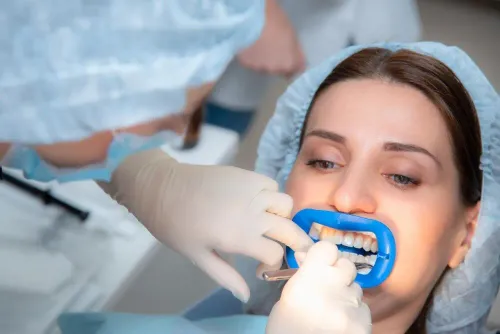
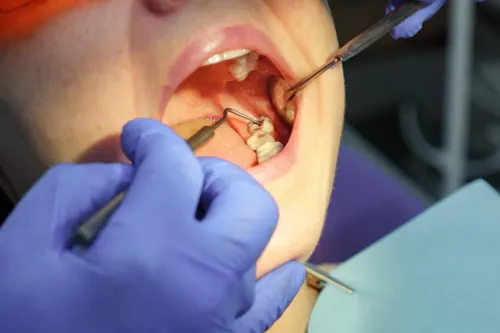
1. At the implant consultation, the dentist examines the socket or missing-tooth area, gums, bite, neighbouring teeth and medical history. Dental X-rays show the roots and general bone level; a 3D CBCT scan maps bone height, width and nearby structures for precise planning.
2. If the tooth is still present, tooth extraction and implant placement may occur during one appointment when the socket and bone provide suitable stability. If not, the site heals first, with preservation or grafting if the planned implant needs additional support.
3. The dentist places the titanium implant body in the jawbone. A temporary tooth may be fitted, depending on stability and appearance needs, but it must not overload the healing implant.
4. Over the next several months, osseointegration creates a direct structural and functional connection between living bone and the implant surface. The implant is not literally fused to bone, and it does not develop the pressure-sensing ligament of a natural tooth.
5. After healing, the dentist checks stability and fits the abutment, which rises through the gum. An impression or digital scan records the implant position, gum contours, bite and neighbouring teeth for the laboratory-made crown.
6. At the final appointment, the custom crown is attached, its contacts and bite are adjusted, and you receive cleaning instructions. Review appointments check the gum, implant, crown and bite so loosening, wear or inflammation is found early.
How your bone, gums, and extraction site determine implant timing
Immediate implant placement is possible only when the socket, infection status, gum tissue, and implant bone volume support predictable stability. A dentist checks these factors clinically and may use dental X-rays or cone-beam computed tomography (CBCT) to measure the socket walls, available bone, mandibular nerve, or maxillary sinus.
The timing follows the condition found at examination:
- Place the implant during extraction when infection is controlled, the socket walls remain suitable, enough bone allows primary stability, and the implant can sit in the correct position.
- Treat infection and allow healing when pus, extensive inflammation, or damaged socket walls prevent safe placement. Placing an implant into an uncontrolled infection risks poor healing.
- Perform extraction-site preservation when the socket is likely to lose important ridge width, especially along the thin outer facial wall. A dentist may place graft material and a membrane at extraction, then wait for healing.
- Use bone grafting when the healed ridge lacks the height or width needed to anchor the implant safely. The graft must mature before implant placement, adding months to treatment.
Healthy gum tissue matters as much as bone. Active gum disease, bleeding, deep pockets, or inadequate cleaning must be addressed before surgery because inflamed tissue raises the risk of peri-implant disease.
A delayed implant is not a failed plan; it is the safer choice when immediate placement cannot achieve stable positioning or a clean, healthy foundation.
When you receive a temporary tooth and when you can chew normally
An immediate temporary tooth can be fitted on the day of implant placement when the implant has enough initial stability and the site allows it. It improves appearance during healing, but it does not show that osseointegration is complete. Avoid chewing hard or sticky foods on that side unless your dentist gives different instructions.
| Restoration | When it is placed | What it is designed to do |
|---|---|---|
| Immediate temporary tooth | Same day or shortly after surgery, when suitable | Maintain appearance and guide the gum shape; it is not the definitive chewing tooth |
| Final permanent crown | After osseointegration and gum healing, often after several months | Provide the long-term shape, contact with neighbouring teeth, and chewing surface |
Implant healing time commonly lasts about three to six months, although the upper jaw, bone grafting, infection treatment, or poor initial stability can extend it. Your dentist confirms readiness with an examination and, when needed, imaging before attaching the final permanent crown.
You can chew normally after the crown is fitted and your dentist confirms that the bite is balanced. Start with moderate pressure because an implant has no periodontal ligament, so it does not provide the same pressure or movement sensation as a natural tooth.
Clean around it daily; the crown cannot decay, but plaque can inflame the surrounding gum and bone.
How an implant compares with a three-unit bridge over time
The implant is usually preferable when the adjacent teeth are healthy and you want to avoid filing them down for support. It also suits patients with adequate bone and gums who can complete healing and attend follow-up appointments.
A conventional bridge can be the better choice when the neighbouring teeth already need crowns, implant surgery is unsuitable, or you need a fixed replacement without implant healing time.
| Option | Effect on adjacent teeth | Main long-term consideration |
|---|---|---|
| Single implant | Leaves adjacent teeth uncut, while contacts and bite are still checked during crown design | Requires surgical treatment, bone healing, cleaning around the crown, and monitoring |
| Three-unit bridge | Uses two adjacent teeth as prepared supports for one replacement tooth | Requires reduction of those teeth and careful cleaning beneath the bridge |
| Single implant or bridge | Can restore chewing and help limit tooth drifting | Neither option prevents every change in the jawbone or guarantees a permanent crown |
An implant crown cannot decay, but plaque can inflame the surrounding gum. Peri-implant mucositis causes inflammation without bone loss; peri-implantitis involves inflammation with progressive supporting-bone loss. Brush twice daily, clean around the implant with the method your dentist demonstrates, and attend recall examinations and professional cleaning when advised.
Implant crown maintenance includes checking the crown, abutment, bite, gum, and bone. Clenching, grinding, loose components, chipped porcelain, and worn crowns can create problems even when the implant remains integrated.
Kaira Dental Care & Implant Centre can compare these risks with the condition of your supporting teeth before you choose between an implant versus dental bridge.
Related service
Single Tooth Implant Dr. Ashi Agarwal, an experienced Dental Surgeon at her clinic on Wagbil Road, Kavesar, Thane West, provides advanced Single Tooth Implant treatments... View service → |
Frequently asked questions
How do the three parts of a single tooth implant replace a missing tooth?
The implant fixture replaces the root in the jawbone, the abutment connects the fixture through the gum, and the crown replaces the visible tooth.
What happens before the final implant crown is fitted?
The process includes an examination, treatment planning, implant placement, healing, abutment connection, and fitting the final crown.
How do bone, gums, and the extraction site affect implant timing?
Adequate bone, healthy gums, and a healed or suitable extraction site influence whether placement occurs immediately or after healing and additional treatment.
When do you receive a temporary tooth and chew normally?
A temporary tooth is provided when it protects appearance and function without overloading the implant; normal chewing resumes after healing and final crown placement according to your dentist’s instructions.
How does a single tooth implant compare with a three-unit bridge over time?
An implant stands independently, while a three-unit bridge uses the adjacent teeth for support; compare preparation, cleaning, maintenance, healing time, and replacement needs.