Replacing a whole row of teeth involves an irreversible decision, and the right starting point is not whether the teeth look unattractive but whether they can still be restored predictably. By the end, you will know which clinical findings prompt consideration, how full-arch options differ, what the assessment involves, and which risks can change the plan.
Key takeaways
- Full arch treatment replaces one dental arch, not necessarily every tooth with an implant.
- Compare fixed bridges, overdentures, conventional dentures and individual implants before deciding.
- Ask how bone volume, sinus position, nerves and implant number affect your design.
- Confirm temporary teeth, final prosthesis, maintenance and repair responsibilities in writing.
What “full arch” means and when the remaining teeth may be beyond predictable repair
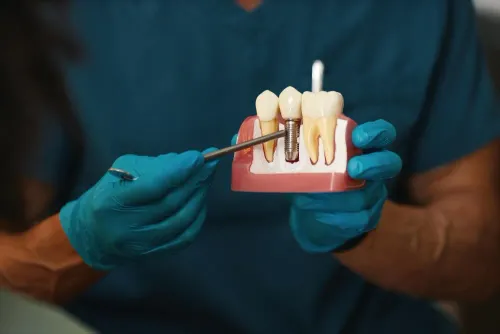
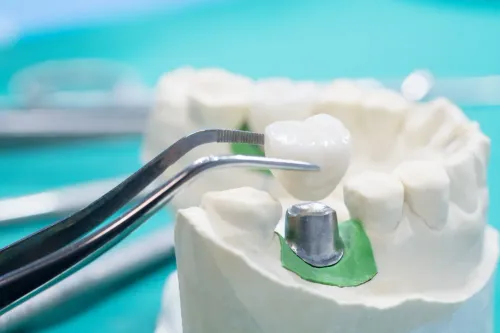
Full arch implants meaning treatment for one dental arch—the upper row, lower row, or both—not necessarily one implant for every tooth. A fixed bridge or removable overdenture replaces the teeth in that arch while resting on several implants.
The plan usually covers an entire row only when the remaining teeth cannot be restored with a predictable long-term result.
A dentist may consider removing the remaining teeth when there is:
- Widespread decay or repeated tooth failure despite previous treatment
- Advanced periodontal disease with loose teeth, infection or substantial bone loss
- Severe fractures or wear that leave too little sound tooth structure for restoration
- Almost complete tooth loss, or an unstable, uncomfortable denture
- A combination of problems that makes individual repairs unlikely to last
A restorable tooth is not automatically removed to create upper arch implants or lower arch implants. Teeth worth saving can sometimes remain while only failed teeth receive treatment, although that produces a different plan from a fully edentulous arch.
Extracting a sound or repairable tooth is irreversible, and implants can also develop inflammation around the implant, bone loss, loosened components or fractures.
Unattractive, crowded or uneven teeth alone do not prove that full-arch treatment is appropriate. Ask which teeth have a poor prognosis, what evidence supports extraction, and whether a bridge, individual implants, conventional denture or implant-retained overdenture could preserve more natural tooth structure.
“Full arch” describes the span being replaced; it does not by itself determine that every existing tooth must be removed.
How fixed bridges, overdentures, dentures and individual implants compare
Stability is the clearest dividing line, but it is not the only one. A fixed full-arch bridge stays in place during chewing; an implant-retained overdenture is removable; complete dentures rest on the gums; individual dental implants replace teeth separately.
| Option | Stability and chewing | Cleaning, appearance and treatment effort | Reversibility |
|---|---|---|---|
| Complete dentures | Least stable, especially on a lower jaw with severe bone loss; movement can affect chewing and speech. | Simple to remove and clean, but may need adhesive and can provide less lip support. Usually the least invasive option. | Most reversible and easiest to repair or replace. |
| Implant-retained overdenture | Implants improve retention and chewing while allowing removal. Two implants can improve a lower overdenture, but they do not suit every case. | Easier to remove for hygiene and can restore lip support; requires implant surgery and periodic replacement of clips or attachments. | More adaptable than a fixed bridge; the design can be modified if an implant fails. |
| Fixed full-arch bridge | Feels more like a continuous row of teeth and provides strong chewing stability. | Cannot be removed by you, and cleaning underneath requires specialised tools; treatment involves surgery and extensive prosthetic work. | Less flexible; one failed implant can require a provisional change or bridge redesign. |
| Individual dental implants | Closest to replacing teeth separately, with strong stability when bone and spacing allow. | Natural-looking and easier to clean between teeth, but requires more surgery, time and bone support. | Individual units can be repaired or replaced without rebuilding an entire arch. |
Choose based on hygiene ability, bone, smile design, lip support, bite forces and tolerance for removable teeth—not on the label “all-on-4.” Any fixed bridge still needs daily cleaning and professional monitoring.
Why implant number, bone and three-dimensional anatomy determine the design
Four implants are not automatically enough for a complete fixed arch. The number of implants for full arch treatment depends on the planned teeth, bone volume, bite forces, cantilever length, cleaning access and the backup plan if one implant fails.
An All-on-4 implants design can suit selected patients with usable bone in strategic positions. More implants provide greater support and redundancy when forces are high, the bridge is long, or losing one implant could compromise the entire prosthesis.
Planning uses a CBCT scan for dental implants when three-dimensional detail will change treatment. Unlike a flat radiograph, CBCT shows the proposed implant sites in relation to the maxillary sinus, nasal cavity, mandibular canal and facial bone. The scan does not replace an examination or a prosthetic plan.
The team may choose:
- Tilted posterior implants to use available bone and avoid a sinus graft, accepting possible compromises in angulation, hygiene access or tooth position.
- Bone grafting for full arch implants when the ridge is too thin or short, facial bone and smile appearance need support, or the prosthesis requires a stronger foundation.
- More implants when the bite, bridge span or failure risk demands extra support.
- An implant-retained overdenture when cleaning ability, lip support, bone limits or reversibility make a removable design safer.
- A fixed bridge only when you can maintain it and the anatomy supports its long-term design.
Facial growth must be substantially complete before elective implants; younger patients need age-appropriate alternatives and specialist planning.
What happens from examination to temporary teeth and the final prosthesis
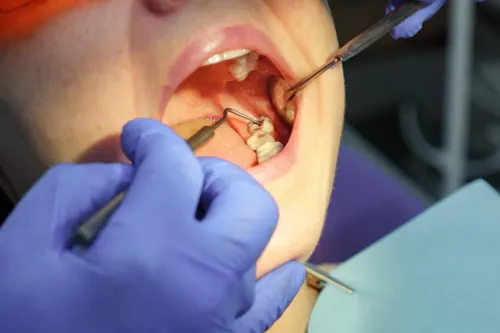
A full arch implant consultation starts with deciding whether the remaining teeth are removable, repairable, or worth preserving. The clinician examines teeth, gums, bite, jaw joints, smile line, facial support and your ability to clean beneath a future bridge or around an overdenture.
1. Expect photographs, dental X-rays and, when the three-dimensional detail changes the plan, a cone-beam CT scan. It maps the proposed implant positions against the sinus, nasal cavity, mandibular canal and facial bone; it does not replace a clinical examination or prosthetic design.
2. The team reviews your medical history, medications, allergies, smoking, diabetes control, previous radiation, bone-health drugs and healing problems. They may request blood tests or medical clearance when your history indicates a risk. Implant treatment planning also considers jaw growth, so elective implants are deferred until facial growth is substantially complete.
3. The agreed teeth are removed, if necessary, and infected tissue is treated. Depending on bone, stability and bite, implants may heal beneath the gum or support immediate loading dental implants.
4. Temporary teeth after implant surgery restore appearance and function while the implants heal. They may be fixed or removable, and adjustments can reveal speech, bite or cleaning problems before the final design.
5. After healing and stability checks, the laboratory makes the definitive bridge or overdenture. Ask what happens if an implant fails: replacement, a modified provisional, a removable conversion or a redesigned bridge should be planned before surgery.
The risks, maintenance demands and questions to settle before deciding
Smoking and dental implants are a high-risk combination: smoking impairs healing and raises the risk of peri-implant disease. Uncontrolled diabetes and implant healing also require attention; ask how your glucose control affects surgery and whether medical clearance is needed.
Active gum disease, poor plaque control, teeth grinding, inadequate bone, and difficulty cleaning beneath a bridge can reduce long-term success. A fixed bridge is not maintenance-free: daily interdental brushes, floss threaders or suitable water irrigation support peri-implantitis prevention, alongside professional reviews and full arch implant maintenance.
Before consenting, ask:
- Which teeth are genuinely unrestorable, and why can each repairable tooth not be preserved?
- What does the three-dimensional scan show about the facial bone, sinus, nasal cavity or mandibular canal, and would grafting improve support or cleaning?
- How will smoking, diabetes, gum disease, medications or grinding change my healing time, implant choice or prognosis?
- What happens if an implant fails during healing or after the bridge is fitted? Ask whether the plan allows replacement, a modified temporary, a removable prosthesis or a redesigned bridge.
- How many implants provide redundancy, and what compromises follow from using four rather than additional implants?
- Who removes and services the bridge, how often are reviews needed, and what are the likely repair or replacement requirements?
Kaira Dental Care & Implant Centre should be able to explain these decisions in terms of your scans, bite, health history and cleaning ability—not present one fixed design as inevitable.
Related service
Full Arch Implants Dr. Ashi Agarwal, a dedicated Dental Surgeon at her clinic on Wagbil Road, Kavesar, Thane West, offers advanced Full Arch Implant solutions for... View service → |
Frequently asked questions
What does “full arch” mean in implant dentistry?
Full arch means replacing the teeth in one dental arch—the upper row, lower row, or both—with a fixed bridge or removable overdenture supported by several implants.
How do fixed bridges, overdentures, dentures and individual implants compare?
A fixed bridge stays attached to implants, while an overdenture clips onto implants and can be removed. Conventional dentures use no implants, and individual implants replace teeth separately when enough healthy teeth and bone remain.
Why do implant number, bone and three-dimensional anatomy matter?
They determine where implants can be placed, how forces are distributed, whether grafting is needed, and whether the final teeth can be fixed or removable.
What happens during full arch implant treatment?
Treatment usually includes an examination, three-dimensional imaging, planning, implant placement, temporary teeth and later fitting of the final prosthesis after healing and bite checks.
What risks and maintenance should you discuss before choosing full arch implants?
Discuss infection, implant failure, nerve or sinus complications, bone loss, cleaning access, professional reviews, repairs, replacement of prosthetic parts and the cost of long-term maintenance.