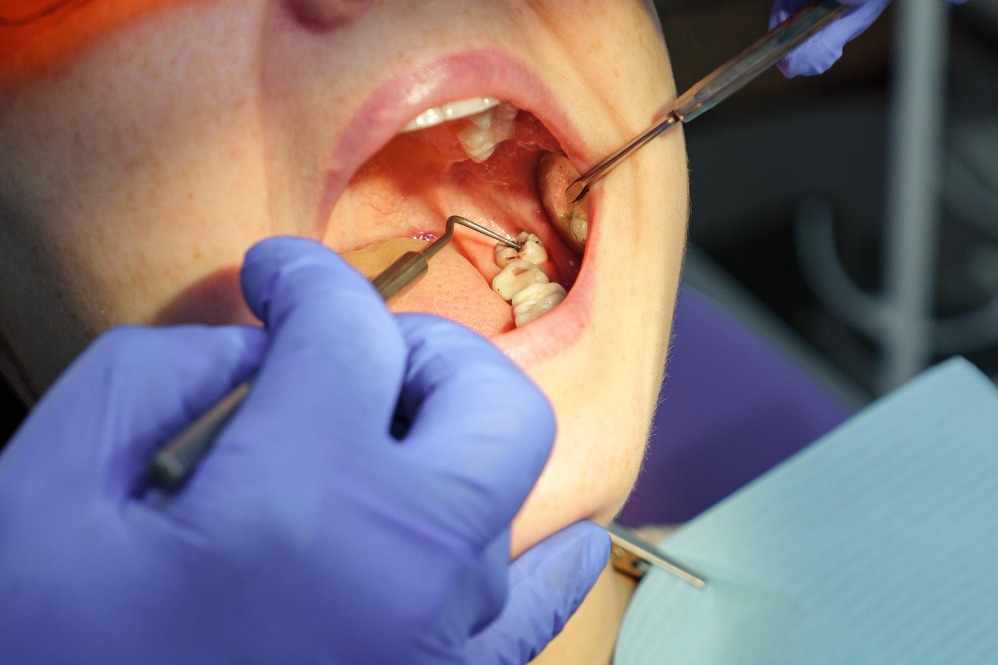
Wisdom teeth do not automatically need removal simply because they are present. Some erupt normally and remain functional without creating significant problems. Others become partially erupted, trapped beneath the gum or bone, difficult to clean, or positioned in a way that affects surrounding tissues.
Knowing when Wisdom Tooth Extraction should be evaluated can help patients in Waghbil, Thane West avoid waiting until discomfort becomes difficult to manage.
When Should a Wisdom Tooth Be Checked
A dental assessment is advisable when you notice symptoms around the back of the mouth such as:
- Recurrent pain
- Gum swelling
- Difficulty opening the mouth comfortably
- Food repeatedly getting trapped around a partially erupted tooth
- Unpleasant taste or discharge
- Tenderness around the back molars
- Repeated inflammation around the wisdom tooth
- Damage or decay involving the wisdom tooth or adjacent tooth
Symptoms alone do not determine whether extraction is required. Examination and dental imaging can help identify the tooth's position and its relationship with nearby structures.
Impacted Wisdom Teeth Need Individual Assessment
An impacted wisdom tooth is one that does not erupt normally into its expected position.
Impaction can occur in different orientations and at different depths. Some impacted teeth remain symptom-free, while others contribute to recurrent inflammation, decay, gum problems, or damage in the area.
This is why the presence of an impacted tooth does not by itself provide enough information to decide on surgery.
What Should You Know Before Extraction
Before proceeding, patients should understand why removal has been recommended.
The dentist or dental surgeon may evaluate:
- Tooth position
- Root shape
- Surrounding bone
- Condition of the adjacent molar
- Proximity to relevant anatomical structures
- Existing infection or inflammation
- Medical history and medications
The expected complexity of extraction can vary considerably between a fully erupted wisdom tooth and a deeply impacted tooth.
Planning for Recovery
Post-extraction instructions are an important part of treatment.
Patients are typically given guidance about protecting the extraction site, food choices, oral hygiene, prescribed medications when indicated, and activities to avoid during the early healing period.
The clinician should also explain which symptoms are expected during recovery and which changes require review.
For people considering Wisdom Tooth Extraction in Waghbil, Thane West, Kaira Dental Care & Implant Centre can assess symptomatic or impacted wisdom teeth and explain whether monitoring, treatment of the surrounding area, or extraction is appropriate.
Patients in Waghbil, Thane West, Maharashtra, should avoid making the decision solely on the basis of occasional discomfort or the assumption that every wisdom tooth must be removed. A clinical examination and suitable imaging provide the information needed to judge the position, potential risks, and treatment requirements of the individual tooth.
Keywords