An infected tooth does not automatically require several dental appointments, but completing treatment in one sitting is safe only when the canals can be cleaned, disinfected, dried and sealed properly. By the end, you will know which clinical findings support same-day treatment, when staged care is safer, what the appointment involves and which symptoms after treatment need prompt attention.
Key takeaways
- One-visit treatment includes cleaning, disinfecting, filling, and sealing the canals.
- Staged treatment suits teeth with drainage, complex anatomy, or uncontrolled infection.
- Your dentist assesses symptoms, X-rays, canal shape, isolation, and restorability.
- Call promptly for swelling, fever, severe pain, or a temporary filling that comes out.
What single-sitting root canal treatment actually includes
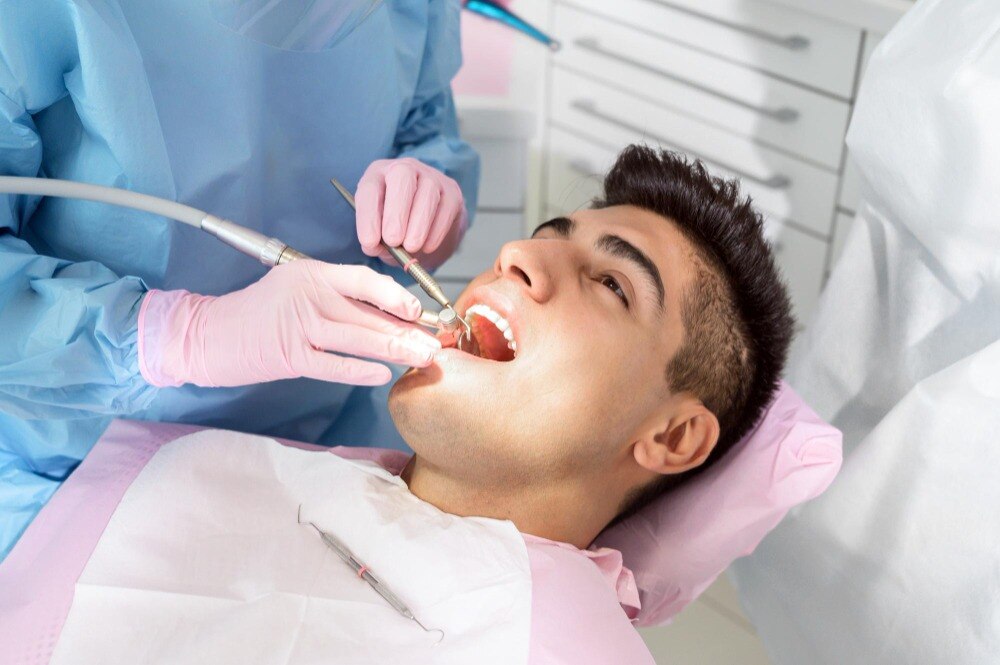
Single sitting root canal treatment means completing the essential treatment from diagnosis through sealing during one appointment. A one-visit root canal is not simply opening an infected tooth and placing medicine inside; the canals must be cleaned, disinfected, filled and sealed before you leave.
The appointment includes:
- Examination and imaging to confirm the tooth can be treated and restored
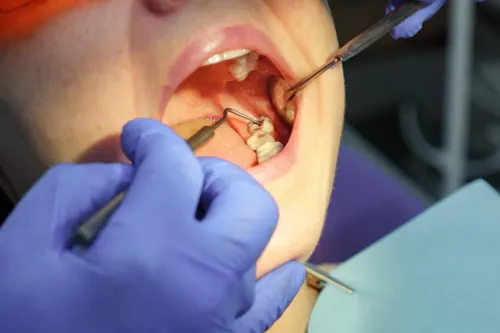
- Rubber-dam isolation to keep saliva out and protect you from instruments and irrigants
- Access through the crown and pulp removal
- Cleaning and shaping of every reachable canal
- Irrigation and disinfection to reduce bacteria and tissue debris
- Drying and filling the canals with a root-filling material
- A temporary or permanent coronal seal to prevent saliva and bacteria entering again
The dentist must complete these steps without leaving persistent fluid, bleeding or debris that prevents a reliable seal. If the canals cannot be dried or adequately disinfected, stopping after cleaning and placing an interappointment dressing, commonly calcium hydroxide, is no longer single-sitting treatment.
Finishing in one appointment does not mean less disinfection. Mechanical preparation, irrigation and the final seal do most of the microbial-control work, but neither one-visit nor multiple-visit treatment reaches every microscopic space inside a canal. A longer appointment is the trade-off for completing the procedure safely.
Which clinical findings support treatment in one visit
A tooth is a reasonable one-visit candidate when it is restorable, the canals can be reached and prepared, and the dentist can finish with clean, dry canals and a reliable seal. The infection alone does not require several appointments.
| Clinical finding | Supports one visit | Why it matters |
|---|---|---|
| Restorable tooth | Yes | The remaining tooth can support a temporary or permanent coronal seal. |
| Treatable canal system | Yes | The canals can be located, instrumented and irrigated without unusual obstruction or risk. |
| Rubber dam isolation | Yes | It keeps saliva out and protects you from instruments and irrigating solutions. |
| Manageable bleeding | Yes | Bleeding can be controlled well enough to inspect, disinfect and fill the canals. |
| Adequate drainage | Yes | Pressure and infected fluid have been relieved without ongoing uncontrolled discharge. |
| Dry canals at the end | Yes | Filling a persistently wet canal reduces confidence in the final seal. |
| Spreading swelling or persistent exudate | No | Ongoing fluid or swelling signals that immediate filling may be less predictable. |
The dentist must also have enough appointment time to complete cleaning, shaping, disinfection, filling and the coronal seal without rushing. A longer visit is the trade-off for avoiding another injection, temporary restoration and possible leakage between appointments.
One-visit treatment does not sterilise every microscopic space in a tooth or guarantee immediate pain relief. Its success depends on mechanical preparation, irrigation, canal dryness and the quality of the final seal.
When staged treatment is safer or more predictable
Immediate filling is less predictable when the canal cannot be cleaned, dried, or sealed with confidence. Two or more visits give the dentist time to control infection, place an interim dressing, and reassess before obturation.
A draining abscess does not automatically rule out same-day treatment, but uncontrolled drainage or persistent exudate makes immediate filling unsuitable. Spreading swelling, fever, malaise, or severe symptoms requiring medication between visits need urgent management before the final seal.
- Calcified canals can be difficult to locate and negotiate without risking blockage, perforation, or instrument separation.
- Retreatment often involves missed canals, old filling material, leakage, or a persistent infection that requires additional investigation.
- A perforation or separated instrument may need repair or specialist management before filling.
- If rubber-dam isolation cannot be maintained, saliva can contaminate the canal and irrigants or instruments can endanger you.
- Insufficient appointment time is a safety problem: rushing disinfection or sealing leaves infected areas behind.
| Situation | Why staged care helps | What happens next |
|---|---|---|
| Draining abscess with ongoing fluid | The canal cannot be dried for a reliable seal | Drainage is controlled, an interim dressing is placed, and the tooth is reviewed |
| Calcified or complex canals | Locating and shaping the full canal system needs more time | Treatment continues after canal anatomy and working length are confirmed |
| Uncertain diagnosis or procedural complication | Immediate filling could seal the wrong problem or conceal damage | The dentist investigates, repairs or refers, then completes treatment when predictable |
How the dentist decides whether your tooth is suitable
Pain alone does not decide whether one visit is suitable. The dentist first identifies pulpal disease and apical disease, then checks the tooth’s restorability, periodontal support, swelling, drainage and bite. A percussion test and bite test help locate inflammation and reveal whether biting pressure points to the tooth or a crack.
A periapical radiograph shows root shape, bone changes, previous treatment, curvature and possible hidden canals. Ask whether the image is enough or whether limited-field CBCT is needed for unusual anatomy, retreatment or suspected resorption. The scan should answer a specific question, not replace clinical examination.
One-visit treatment is more predictable when the dentist can isolate the tooth with a rubber dam, locate and instrument every canal, control bleeding, and clean, disinfect, dry and seal the system. Persistent fluid drainage, a canal that cannot be dried, complex calcification or an appointment too short to complete these steps argues for staging treatment.
Discuss these points before agreeing:
- Can the tooth be predictably restored and sealed after treatment?
- How many canals and what anatomical difficulties does the radiograph show?
- Can you tolerate a long appointment with your mouth open?
- What happens if drainage continues or a canal cannot be safely completed?
- What temporary or permanent restoration will protect the tooth afterward?
At Kaira Dental Care & Implant Centre, ask the dentist to explain these findings on your radiograph and state the specific reason for choosing one visit rather than staged treatment.
Related service
Root Canal Treatment Dr. Ashi Agarwal, a skilled Dental Surgeon at her clinic on Wagbil Road, Kavesar, Thane West, offers advanced Root Canal Treatment to save infected... View service → |
What to expect after treatment and when to call
Mild soreness around the tooth, jaw fatigue, and tenderness on biting are ordinary after treatment. These symptoms should gradually improve over the next few days; follow the pain-relief instructions you were given and avoid testing the tooth by repeatedly biting on it.
| Sign | What it means | What to do |
|---|---|---|
| Expected discomfort | Mild soreness or tenderness that improves | Use recommended pain relief and monitor it |
| Dental review needed | Pain that worsens, persists, or prevents sleep | Contact the treating dentist promptly |
| Possible emergency | Increasing swelling, fever, facial spreading, or feeling unwell | Arrange urgent dental assessment |
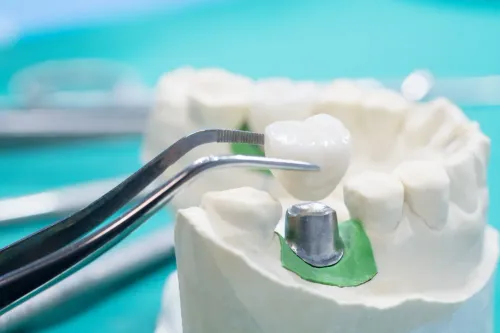
Protect a temporary filling until the permanent crown or restoration is placed. Do not chew hard, crunchy, or sticky foods on that side, and avoid pulling floss upward against the filling; slide it out through the side instead. Keep brushing and cleaning around the tooth.
If the temporary filling falls out, cover the area with clean dental wax or cotton only briefly and contact the dentist.
Go to emergency care immediately if swelling makes breathing or swallowing difficult, spreads toward the eye or neck, or rapidly enlarges. Fever with marked weakness, confusion, or difficulty opening your mouth also needs urgent attention. Do not treat these signs with leftover antibiotics; antibiotics do not replace drainage and cleaning of the infected canal.
Frequently asked questions
What does single-sitting root canal treatment include?
It includes diagnosis, access to the pulp chamber, canal cleaning and shaping, disinfection, filling, and sealing during one appointment.
Which findings support completing root canal treatment in one visit?
One-visit treatment is more suitable when the tooth can be isolated, the canals are accessible and negotiable, and cleaning and sealing can be completed properly without persistent drainage.
When is staged root canal treatment safer or more predictable?
Staged treatment is safer when infection causes ongoing drainage, swelling, difficult canal anatomy, limited mouth opening, or uncertainty about whether the tooth can be restored.
How does a dentist decide whether a tooth is suitable for one visit?
The dentist combines your symptoms and examination with dental X-rays, canal anatomy, the tooth’s restorability, ability to control moisture, and whether the canals can be cleaned and sealed fully.
What should you expect after single-sitting root canal treatment?
Mild tenderness when biting can follow treatment. Contact your dentist for increasing pain, swelling, fever, an uneven bite, or a lost temporary filling.