Dark or uneven teeth do not all have the same cause, so bleaching is not automatically the right first step. By the end, you will know what a dentist checks, how the appointment progresses, how long the shade change takes, and when another treatment is more suitable.
Key takeaways
- Ask your dentist to identify whether stains are extrinsic or intrinsic.
- Grey, banded, fluorosis-related and tetracycline-related discolouration responds less predictably.
- Judge the final shade after treatment-related dehydration has settled.
- Compare whitening with trays, bonding or veneers when stains will not bleach evenly.
The Examination Comes Before the Whitening
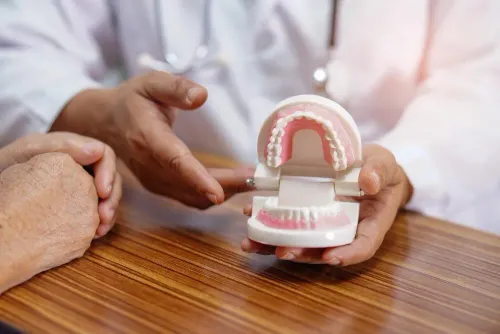
A dentist needs to identify the tooth discolouration causes before applying whitening gel. The examination separates extrinsic stains, such as coffee, tea, tobacco, plaque and surface stains on enamel, from intrinsic discolouration within the tooth. Yellow or brown changes often respond more predictably than grey, banded, fluorosis-related or tetracycline-related colour.
1. Check whether plaque, calculus and surface staining are making the teeth appear darker. A professional cleaning may be the right first step; whitening cannot remove hardened calculus.
2. Examine every tooth for decay, leaking fillings or crowns, cracks, exposed root surfaces and active gum disease. Whitening an untreated problem can trigger sharp pain or worsen gum irritation.
3. Identify whether one tooth changed colour after trauma, root-canal treatment or pulp death. A single grey or brown tooth may need an internal assessment, internal bleaching or a restoration instead of ordinary external whitening.
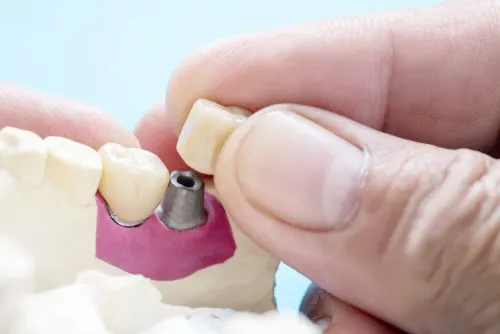
4. Assess existing fillings, bonding, crowns and veneers. Whitening changes natural tooth colour but does not lighten these materials, which can leave a mismatch.
5. Ask about pregnancy, breastfeeding, age, sensitivity, medicines and whitening already used. Cosmetic whitening is usually deferred for children and during pregnancy or breastfeeding because safety evidence is limited.
The dentist will also discuss smoking and frequent coffee, tea or cola, since continuing exposure can shorten the result. The recommendation should match the cause, tooth condition and shade you can realistically achieve.
What Happens During an In-Office Whitening Appointment
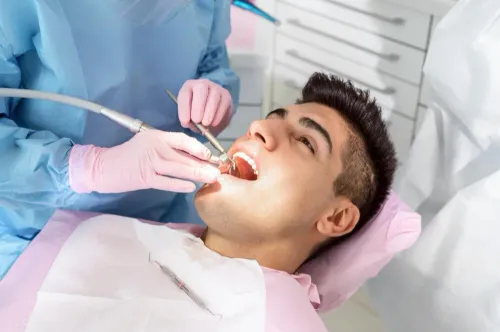
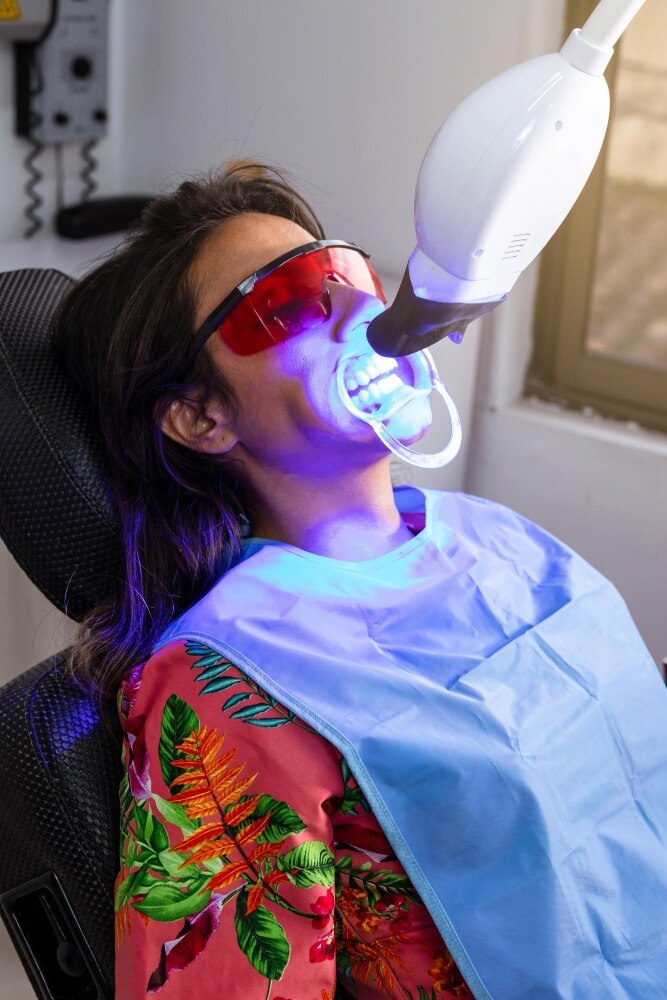
A professional teeth whitening appointment usually follows a measured sequence, rather than one uninterrupted application. The dentist begins with a shade recording, using a shade guide or photograph to document the starting colour and create a comparison for later.
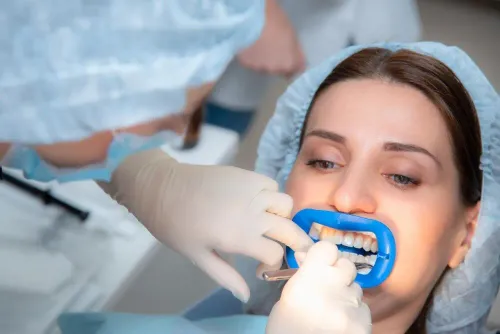
- Protective barriers or retractors keep the lips and cheeks away from the treatment area.
- Gum protection covers the gum edges, because peroxide contacting exposed tissue can cause temporary burning or white patches.
- During whitening gel application, the dentist places a measured peroxide gel on the visible tooth surfaces for a timed interval.
- The gel is removed and replaced for additional applications when the planned concentration and contact time require it.
- A whitening light may be used if the clinic’s system specifies one, but light use does not replace correct gel concentration, coverage or timing.
- The teeth are rinsed and the dentist checks the gums, enamel surfaces and immediate shade change before you leave.
The post-treatment assessment also checks for sensitivity, gum irritation, missed areas and uneven colour. Tell the dentist if one tooth remains distinctly grey or brown; that pattern needs separate assessment rather than repeated external bleaching.
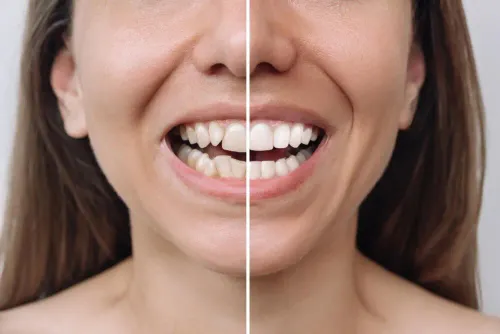
The immediate shade can look lighter than the stable result because dehydrated teeth reflect light differently. A more meaningful comparison comes after the teeth rehydrate, so the dentist may record the immediate result and arrange a later review instead of judging success on the chairside shade alone.
How Many Sessions You May Need and When to Judge the Result
A single in-office whitening visit commonly completes the active treatment in about 60 to 90 minutes. The teeth whitening treatment timeline depends on the starting shade, staining cause, peroxide strength and the number of whitening sessions prescribed. Some people need one appointment; others need a second visit after a planned interval.
Teeth can look temporarily lighter immediately after treatment because dehydration makes enamel appear brighter. Wait at least 48 hours before judging the colour, and use the dentist’s review point—often about one to two weeks later—to assess the final whitening shade after rehydration.
- Confirm the number of whitening sessions before treatment begins, including the gap between appointments.
- If you use take-home whitening trays, follow the exact wearing time and course length; extending treatment does not guarantee a lighter, lasting result.
- Avoid deciding on bonding, veneers or replacement restorations until the natural tooth colour has stabilised. Existing fillings, crowns and veneers will not whiten, so they can look darker beside the treated teeth.
- Arrange a review if one tooth remains grey or brown, or if the shade keeps changing. A tooth affected by trauma, root-canal treatment or pulp death may need separate treatment rather than repeated external bleaching.
Choosing Whitening Instead of Trays, Bonding or Veneers
Choose in-office teeth whitening when your natural teeth have a responsive shade and you want a faster change without adding material to them. Compare the alternatives by speed, permanence, effect on restorations and how much tooth structure they alter.
| Option | What it changes | Main trade-off |
|---|---|---|
| In-office whitening | Natural tooth colour | Faster result, but fillings, crowns, veneers, bridges and implants stay their original shade |
| Dentist-supervised whitening trays | Natural tooth colour gradually | Takes days or weeks and requires consistent wear, but offers controlled home treatment |
| Whitening strips | Surface and shallow staining | Less tailored; uneven contact can produce patchy results or gum irritation |
| Bonding | Adds composite to selected surfaces | Repairs shape and colour, but can stain, chip or need refinishing |
| Veneers | Covers the front tooth surface | Masks resistant discolouration, but requires irreversible enamel preparation and later replacement |
Do not choose bleaching to hide decay, a cracked tooth, active gum disease or exposed roots. Whitening also will not correct grey, banded, fluorosis-related or tetracycline-related colour reliably; bonding or veneers may suit those cases better.
Use these questions when comparing a clinic’s plan:
- Will cleaning and polishing remove surface stain before bleaching?
- Which teeth will change, and will my existing restorations become darker by comparison?
- What peroxide concentration, contact time and number of applications do you recommend?
- What is the maintenance plan, and how will you limit sensitivity from repeated treatment?
- If you attend Kaira Dental Care & Implant Centre, ask how the proposed shade will affect any restoration that shows when you smile.
Related service
Teeth Whitening Treatment Dr. Ashi Agarwal, an experienced Dental Surgeon at her clinic on Wagbil Road, Kavesar, Thane West, offers professional Teeth Whitening Treatment to... View service → |
Sensitivity, Gum Irritation and Keeping the Shade
Teeth whitening sensitivity and gum irritation after whitening usually settle within 24 to 72 hours. Stronger peroxide, longer exposure, exposed roots, worn enamel or a poorly fitting tray can make symptoms worse.
- Use the desensitising toothpaste or fluoride product your dentist recommends.
- Avoid very hot, cold, acidic or sweet foods while the teeth feel sensitive.
- Stop additional whitening until sensitivity has settled; do not compensate with longer exposure or extra gel.
- Rinse gel from the gums and follow the prescribed wearing time exactly.
- Contact your dentist if pain is severe, lasts beyond three days, affects one tooth sharply, or occurs without eating or drinking.
- Seek a review for gum irritation that causes ulcers, swelling, bleeding or does not improve within a few days.
Whitening maintenance is usually occasional, dentist-supervised top-up treatment rather than continuous bleaching. Limit staining from tea, coffee, tobacco and red wine, rinse after strongly coloured drinks, and brush twice daily without aggressive pressure. Results fade as new stains accumulate and as the tooth’s natural underlying colour reappears.
Repeated unsupervised bleaching raises the risk of sensitivity and gum irritation, so arrange a review before changing the strength or frequency. Remember that fillings, crowns, veneers, bonding, bridges and implants do not whiten; a colour mismatch can become more visible after treatment.
Frequently asked questions
Why does a dentist examine discoloured teeth before whitening?
The examination identifies the cause and separates surface stains from intrinsic discolouration inside the tooth. Yellow or brown changes often respond more predictably than grey, banded, fluorosis-related or tetracycline-related colour.
What happens during an in-office teeth whitening appointment?
The dentist examines your teeth, protects your gums and applies whitening gel under controlled conditions. The treatment is completed in timed stages, with the dentist monitoring comfort and tooth shade.
How many professional whitening sessions will I need?
The number of sessions depends on the type and depth of discolouration and your response to treatment. Wait until temporary dehydration settles before judging the final shade.
When are trays, bonding or veneers better than whitening?
Trays provide a gradual at-home option. Bonding or veneers can be more suitable when intrinsic stains will not bleach evenly or when you also need to change tooth shape.
What side effects can professional teeth whitening cause?
Temporary tooth sensitivity and gum irritation are the main concerns. Your dentist can adjust treatment if sensitivity develops and explain steps for maintaining the shade afterward.